


Achieving HITRUST Common Security Framework (CSF) certification is a significant achievement for businesses handling sensitive data, particularly in the healthcare industry but also increasingly in other sectors. It demonstrates a strong commitment to information security and regulatory compliance.
In 2025, a successful and smooth certification process depends on comprehending and closely following a comprehensive checklist. With the help of insights from industry leaders in cybersecurity, like Network Intelligence, this guide provides a thorough road map for HITRUST compliance.
Why HITRUST Compliance Matters in 2025
In a time of evolving cyberthreats and stringent data protection laws, HITRUST CSF stands out as a certified framework that incorporates several reliable sources, including HIPAA, ISO, NIST, and GDPR. It offers a systematic and comprehensive approach to information security and privacy risk management.
Gaining HITRUST certification improves your security posture and builds trust with authorities, partners, and clients, giving you a competitive edge.
Your 7-Step HITRUST Compliance Checklist for 2025
If the HITRUST certification process is divided into smaller, easier-to-manage steps, it can be accomplished even though it can be intimidating. Here is a comprehensive checklist to assist your business:
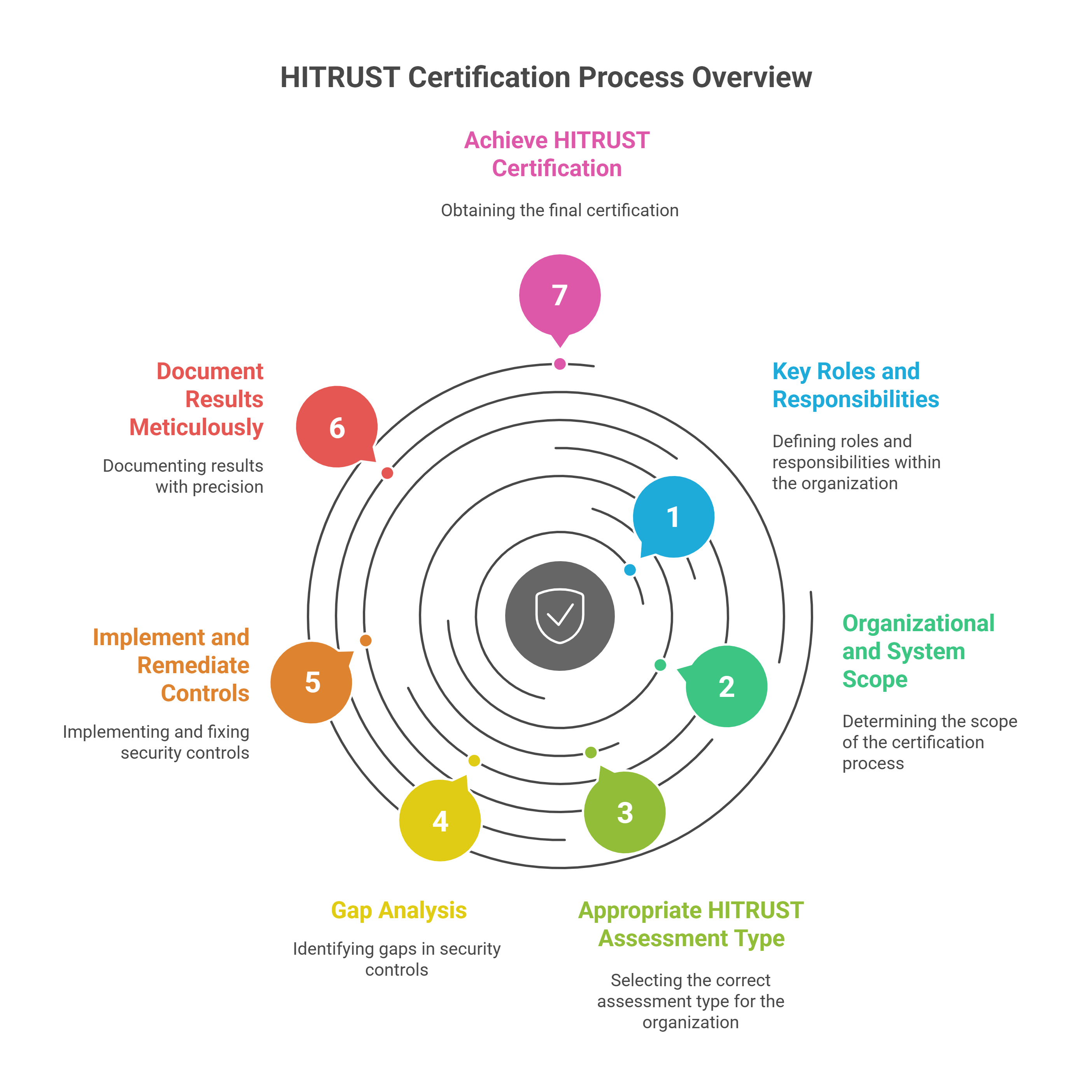
Step 1: Define Key Roles and Responsibilities
A well-defined organizational structure is the cornerstone of any successful compliance program.
Select a Project Coordinator/Manager:
This person will be in charge of managing deadlines, ensuring documentation, and supervising the entire HITRUST compliance project.
Create a Committed Group:
Put together a group of IT workers, security specialists, and representatives from related departments.
Define Roles:
Clearly define each employee’s role in security and compliance, from leadership to individual contributors.
Step 2: Define the Organizational and System Scope
It’s critical to define your scope precisely. This entails determining which assets are subject to HITRUST compliance.
Determine Which Systems Are Critical:
Identify every system, application, piece of data, and physical location that handles, stores, or transmits sensitive data.
Examine the facilities and business units:
Identify the departments and physical locations that are pertinent to the scope.
Take Regulatory Considerations into Account:
Take into consideration all relevant regulatory requirements that call for HITRUST compliance
Step 3: Select the Appropriate HITRUST Assessment Type
HITRUST offers multiple assessment types to accommodate varying organizational risk profiles and compliance requirements.
Smaller businesses or those new to HITRUST and looking to learn cybersecurity hygiene fundamentals will find the e1 (Essentials) Assessment ideal.
i1 (Implemented) Assessment:
Best suited for businesses that must manage cybersecurity risks and comply with industry standards.
r2 (Risk-Based) Assessment:
The most thorough evaluation, the r2 (Risk-Based) Assessment, suits highly regulated sectors (such as healthcare and finance) handling sensitive data and requiring the highest assurance levels.
Step 4: Conduct a Thorough Gap Analysis
This crucial step helps identify differences between your current security controls and HITRUST requirements.
Assess Current Controls:
Compare your existing policies, processes, and technical controls against the selected HITRUST CSF requirements.
Identify Deficiencies:
Note all gaps and areas where your company falls short of the standards.
Step 5: Implement and Remediate Controls
Apply the necessary security controls and address flaws identified through your gap analysis.
Remediation:
Prioritize addressing the most critical gaps first.
Establish Control Goals:
Clearly define objectives for each control.
Technical Testing:
Conduct configuration reviews, penetration tests, and vulnerability scans to verify that controls function correctly.
Step 6: Document Results Meticulously
Thorough documentation ensures successful external audits and demonstrates compliance clearly.
Examine the Results:
Review all assessment data and technical test outcomes carefully.
Create Reports:
Prepare detailed reports covering findings, implemented controls, incomplete remediation plans, and deadlines.
Management Review:
Ensure leadership reviews and approves corrective actions and remediation plans.
Step 7: Achieve HITRUST Certification
The certification process concludes with an external audit and validation. You must hire a HITRUST-authorized external assessor. Companies such as Network Intelligence offer comprehensive HITRUST certification services, helping you navigate this challenging process.
Their seasoned professionals’ deep understanding of HITRUST compliance requirements and best practices ensures a smooth certification experience.
External Audit:
The assessor conducts technical testing, interviews staff, reviews documentation, and observes operations.
Submission and Validation:
HITRUST reviews the reports for verification. If your score exceeds the cutoff, you receive certification. Otherwise, HITRUST provides feedback and suggests corrective actions for resubmission.
How Network Intelligence Elevates Your HITRUST Journey
Network Intelligence streamlines and accelerates your HITRUST compliance journey. As a reputable partner for HITRUST certification and a global provider of AI-powered cybersecurity solutions, Network Intelligence offers:
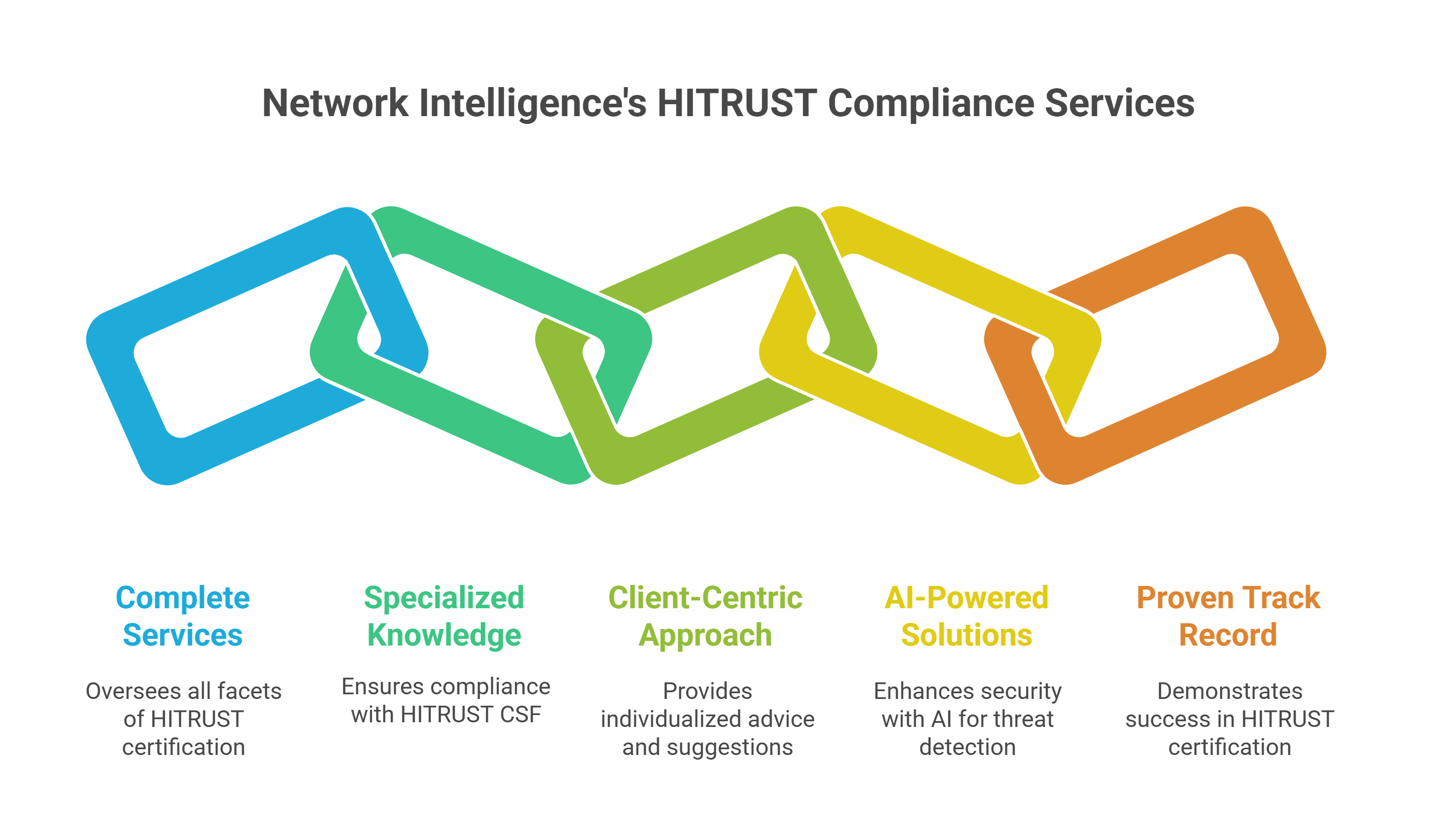
Complete Services:
Network Intelligence handles every step of the HITRUST certification process—from initial readiness evaluations and gap analysis to remediation and final audit support.
Specialized Knowledge:
Their team of seasoned consultants understands HITRUST CSF deeply, ensuring your company meets the framework’s strict requirements.
Client-Centric Approach:
They deliver personalized guidance and practical recommendations, tailoring their services to match your specific needs.
AI-Powered Solutions:
Network Intelligence leverages advanced AI for proactive threat detection, vulnerability management, and GRC automation, enhancing your security posture beyond compliance. Their comprehensive and adaptable ADVISE framework (Assess, Design, Visualize, Implement, Sustain, Evolve) ensures robust cybersecurity.
Proven Track Record:
Network Intelligence has assisted numerous organizations across various industries to achieve and maintain HITRUST certification, strengthening data security and building trust.
Partnering with Network Intelligence helps your organization confidently navigate HITRUST compliance, streamlining the process and reinforcing strong security practices.
Staying Compliant Beyond Certification
HITRUST compliance requires continuous effort. After certification, maintaining a strong security posture and adapting to emerging threats and regulatory changes demand ongoing monitoring, internal audits, and regular reassessments. Network Intelligence supports your ongoing compliance efforts by ensuring controls remain consistent and effective.
By following this comprehensive checklist and tapping into the expertise of trusted partners like Network Intelligence, your company can confidently achieve and maintain HITRUST certification in 2025, safeguard sensitive information, and cultivate a resilient information security culture.
Stay informed. Stay secure. Subscribe to our blog for the latest insights and expert tips. →