


In today’s evolving threat landscape, CISOs face a seemingly impossible challenge: strengthen security while cutting costs. After extensive research and conversations with security leaders, we believe that not only is this possible – it’s an opportunity to build a more resilient security program. Here’s how we’ve helped clients do it right.
Strategic Cost Optimization: The Smart Way Forward
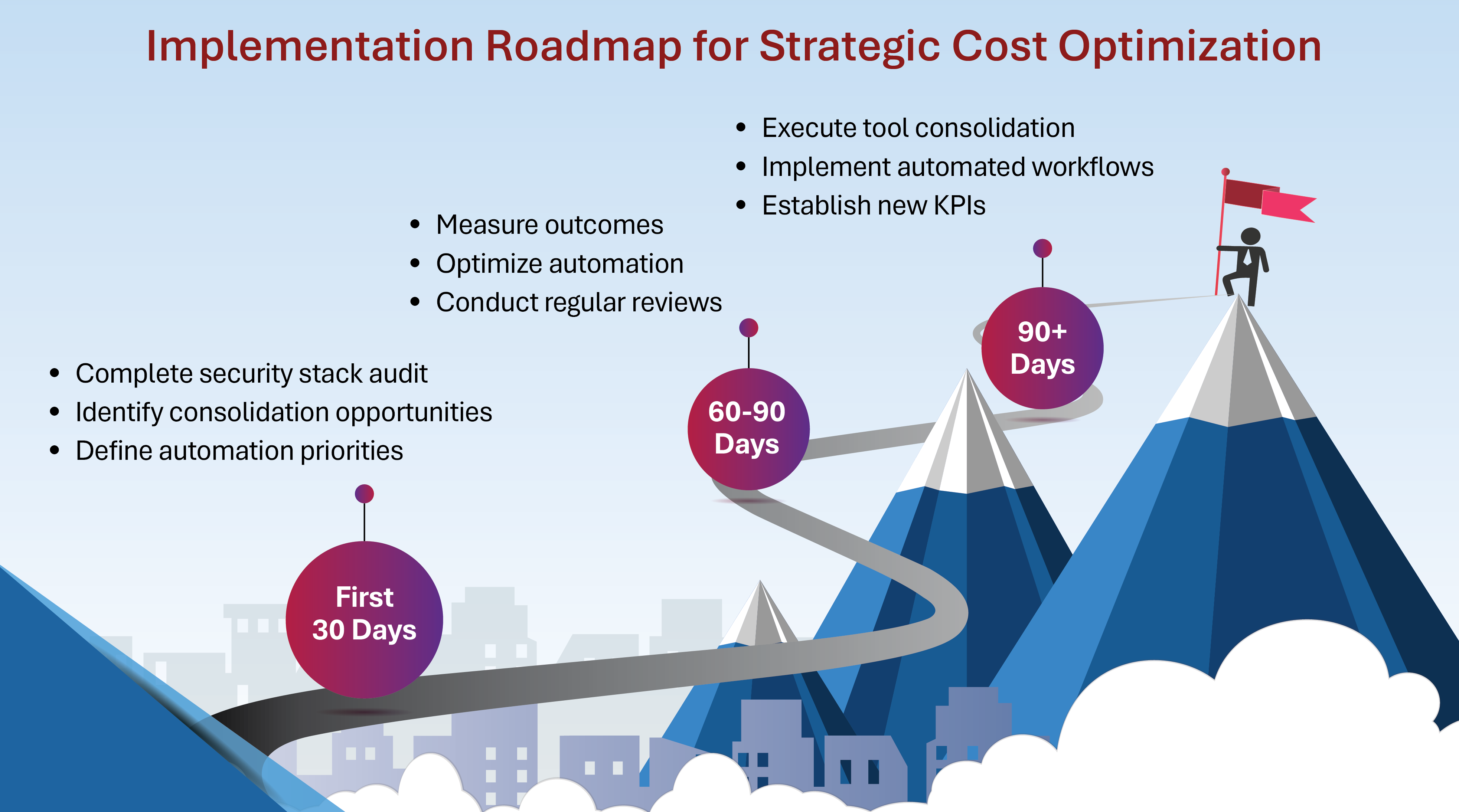
1. Audit Your Security Stack (The 80/20 Rule)
According to IBM Security’s “State of Security Operations 2024”, 49% of organizations use between 6 and 40 security products, with 98% managing these through multiple consoles. This fragmentation creates both cost inefficiencies and security vulnerabilities.
Practical Tips:
- Conduct a thorough audit of your security tools
- Identify and eliminate tool redundancy
- Focus on core capabilities that align with your security strategy
- Evaluate integration capabilities with your existing security infrastructure
Research from Gartner’s cybersecurity analysis team suggests most organizations can reduce their security tool count by 20-30% while improving their security posture through strategic consolidation.
2. Embrace Prevention-First Security
The latest IBM Cost of a Data Breach Report 2024 reveals that organizations leveraging AI and automation save an average of $3.05 million per breach compared to those without these capabilities. The key is focusing on prevention rather than just detection.
Prevention-First Priorities:
- Advanced threat prevention capabilities
- Automated response mechanisms
- AI-powered predictive security measures
- Zero-trust architecture implementation
3. Optimize Human Capital
Deloitte’s Cyber Budget and Resource Allocation Report 2024 shows that small businesses typically allocate 4-10% of their IT budget to cybersecurity, while enterprises often spend 10-20%. However, the focus should be on resource effectiveness rather than just spending levels.
Resource Optimization Strategies:
- Define core in-house competencies
- Evaluate managed service opportunities
- Implement automation for routine tasks
- Establish clear performance metrics
4. Build a Risk-Based Security Program
A comprehensive study by Forrester Research titled “The Total Economic Impact™ Of Zero Trust” demonstrates that organizations implementing Zero Trust have seen up to 92% ROI with payback periods under six months. The key is aligning security spending with actual risk exposure.
Risk Optimization Framework:
- Implement FAIR (Factor Analysis of Information Risk) modeling
- Prioritize investments based on business impact
- Conduct regular risk assessments
- Establish clear security ROI metrics
5. Leverage Automation Strategically
McKinsey & Company’s latest research on “The Future of Cybersecurity Operations” indicates that proper security automation can reduce incident response times by 50-80% while improving accuracy.
High-Value Automation Targets:
- Security alert triage
- Vulnerability management
- Access control administration
- Continuous security testing
The Bottom Line
As we navigate through 2025, the cybersecurity landscape continues to evolve rapidly. Success isn’t about having more tools – it’s about having the right tools, used effectively, by well-trained people, following smart processes.
Remember: The most successful security programs aren’t always the most expensive – they’re the ones that align security spending with business objectives and real-world risks.