

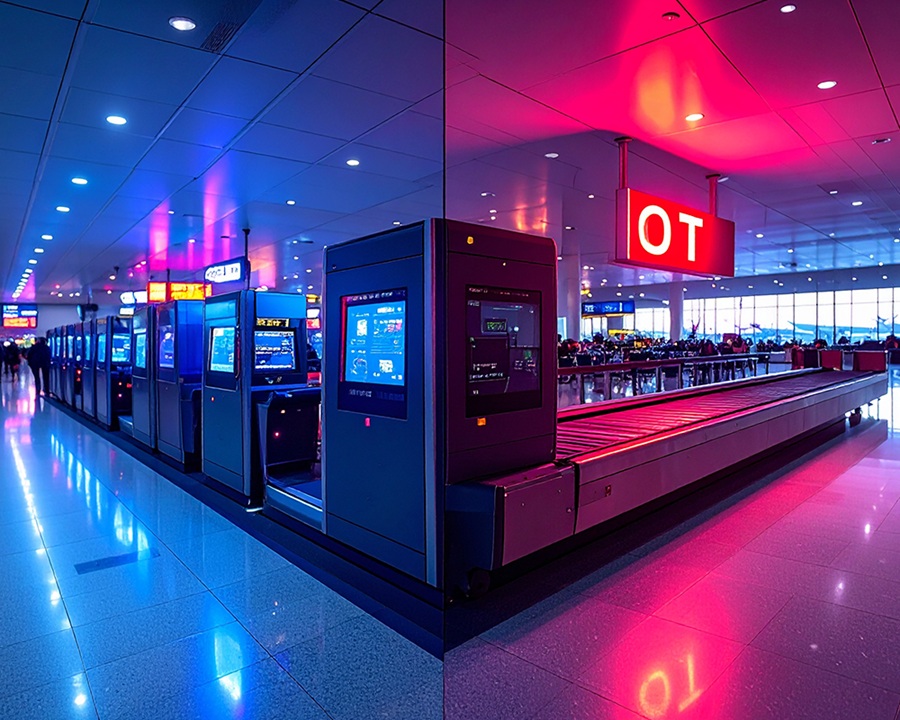
The recent chaos that grounded or delayed flights across major European aviation hubs serves as an urgent and profound wake-up call for the entire global transport sector. When thousands of passengers found themselves stranded, not due to weather or labour disputes, but because of a digital disruption, the vulnerability of modern aviation was laid bare.
This was not merely an inconvenience; it was a demonstration of how deeply interconnected Operational Technology (OT) systems are now squarely in the crosshairs of sophisticated cyber adversaries.
At Network Intelligence, we have spent two decades partnering with aviation and critical infrastructure leaders to anticipate and mitigate threats. The recent attack, which reverberated from Heathrow and Dublin to Brussels and Berlin, underscores a fundamental truth: the question is no longer if aviation and transport organizations will face cyberattacks, but when. Leaders must immediately strengthen their cyber resilience, treating OT security as a non-negotiable component of operational safety.
The Anatomy of a Supply Chain Attack
Early indications confirm that the European airport disruption was the result of a ransomware-style incident. The core point of failure was a cyberattack against Collins Aerospace, a supplier of business and commercial aviation services and a subsidiary of RTX (formerly Raytheon).
The attackers specifically targeted Collins’ ARINC Multi-User System Environment (Muse) software platform. This cloud-based system is mission-critical, running services essential for passenger processing, including electronic check-in, self-service kiosks, and baggage management. Because the Muse system is a “common use” shared infrastructure, its compromise created a single point of failure that efficiently translated into systemic vulnerability across multiple airports and airlines.
The OT Footprint of the Disruption
Airports today are complex digital ecosystems, far beyond simple transport hubs. They rely heavily on Operational Technology (OT) which is increasingly converged with IT networks to achieve efficiency. When the Muse system failed, the direct impact wasn’t just on enterprise IT, but on critical physical operations:
- Passenger check-in kiosks and boarding gates went offline.
- Baggage handling conveyors were disrupted.
- Ground operations were impacted.
This disruption forced airports across the continent, including London’s Heathrow, Brussels Airport, and Berlin Brandenburg, to revert instantly to manual check-in and boarding processes. The resulting operational chaos included mass delays, stranded passengers, and numerous flight cancellations. Brussels Airport, for example, reportedly asked airlines to cancel nearly 140 flights following the incident.
As cybersecurity experts noted, disruptions caused by attacks on the supply chain hit the industry on a damaging global scale, demonstrating how fragile these systems can be in a digitally focused world.
Escalating Threats and Geopolitical Context
The scale of the attack has drawn national security scrutiny. Collins Aerospace is a defence contractor with ties to NATO, leading to speculation that the threat actors may be Russian state-sponsored hackers engaging in hybrid warfare. While the exact identity of the group remains unconfirmed, the incident highlights a broader strategic shift: state-aligned actors are increasingly targeting logistics and critical infrastructure not just for data theft, but purely for disruption.
This risk is compounded by the pre-existing, accelerating threat landscape facing the aviation supply chain. The sheer complexity of the civil aviation supply chain, with a typical commercial airplane relying on over 25,000 suppliers, creates an immense and global attack surface. Experts have previously noted a sharp increase in ransomware incidents, with occurrences inside the aviation supply chain reportedly up 600% in a single year.
Where Critical Defenses Are Failing
The European incident is a stark illustration of systemic weaknesses that persist across critical infrastructure domains:
- Supply Chain Fragility and Third-Party Risk: The reliance on shared, interconnected third-party systems, while boosting efficiency, creates a dangerous infrastructure consolidation and single points of failure. The integration of third-party services and software introduces risks due to potential security gaps in the supply chain. Aviation must now treat supply chain cybersecurity as a strategic defence priority.
- Exploiting Known Weaknesses: Attackers typically exploit a combination of unpatched vulnerabilities in vendor systems and leaked credentials traded on the dark web. The inability to quickly remediate vulnerabilities, especially those in non-aviation specific or Open Source Software components incorporated into critical aviation products, leaves organizations exposed.
- Poor OT Visibility and Slow Response: In many critical infrastructure environments, there is often poor visibility across OT environments. When anomalies, such as early signs of ransomware behaviour, appear, the incident response is often too slow. This allows disruption campaigns to spread faster than existing defenses can react, turning a minor issue into a full-blown operational crisis that threatens business continuity and safety.
When OT is compromised, the consequences are immediate and severe: safety is jeopardized, trust is eroded, and business continuity is disrupted at a massive scale.
Strengthening Resilience: A Proactive Cybersecurity Mandate
The inevitability of future cyberattacks necessitates a shift from reactive security measures to a strategy built on proactive resilience. This requires aviation and OT leaders to adopt integrated, AI-driven solutions that address both the IT and OT domains and provide granular visibility across complex supply chains.
Network Intelligence, powered by the Transilience AI platform – https://www.transilience.ai/, delivers the capabilities necessary to turn a full-blown cyber disruption into a minor incident.
1. Unified Visibility and Proactive Threat Hunting
The critical complexity of aviation, where physical systems (OT) are digitally interconnected with enterprise systems (IT) demands a unified approach.
- 24/7 SOC for IT + OT: Network Intelligence provides a continuous monitoring capability that correlates anomalies across both digital and physical systems. This allows organizations to move beyond siloed security to achieve holistic threat management. –
- Dark Web Monitoring: Identifying leaked airport or airline credentials traded on the dark web before attackers can exploit them is a foundational step in mitigating insider and external threats.
- Threat Intelligence in Context: Transilience AI provides threat intelligence specifically contextualized for aviation and OT systems, ensuring focus is placed on vulnerabilities relevant to mission-critical infrastructure.
2. AI-Driven Vulnerability Management and Prioritization
Given the constantly evolving threat landscape and the sheer volume of potential weaknesses, effective management requires intelligence and speed.
- AI-Driven Vulnerability Prioritization: Transilience AI ensures that scarce resources are deployed effectively by prioritizing systems most critical to mission success—such as check-in, baggage handling, or flight control—for patching and remediation first.
- Integrated Threat Management: Proactively reducing exposure across complex, interconnected IT and OT environments is achieved through integrated threat management, addressing weaknesses identified across the supply chain.
3. Rapid Detection and Incident Response
The speed of detection and response is the decisive factor in mitigating damage from a ransomware attack.
- Continuous Monitoring & Early Detection: The Transilience AI platform continuously monitors environments to detect early signs of ransomware behaviour—identifying anomalies before widespread encryption or system shutdown can occur.
- Rapid Incident Response: Network Intelligence provides the rapid incident response capabilities necessary for quickly containing and isolating attacks to minimize downtime and operational impact.
- Compliance Readiness: Automating control evidence reduces risk exposure stemming from weak processes and supports compliance with growing regulatory requirements.
The Regulatory Imperative for Critical Infrastructure
The recent disruptions reinforce the strategic importance of regulatory alignment and continuous improvement in cybersecurity. The UK’s aviation system is a vital part of Critical National Infrastructure (CNI), requiring the highest standards of safety and security performance. The Civil Aviation Authority (CAA) focuses its oversight on ensuring the industry protects Confidentiality, Integrity, and Availability (CIA) against threats like alteration, denial, and disclosure.
Regulatory frameworks globally, such as the UK’s Cyber Security and Resilience Bill and the EU’s NIS2 Directive, are increasing diligence requirements for CNI suppliers. Furthermore, new European regulations (Part IS) require approved organizations, including design and production bodies, to assess cybersecurity risks and implement measures to secure against identified risks, often indirectly requiring deep consideration of the entire supply chain.
Aviation organizations, designated as Operators of Essential Service or CNI, are expected to exhibit positive indicators across core objectives: Managing security risk, Protecting against cyber attack, Detecting cyber security incidents, and Minimizing the impact of cyber security incidents.
The industry must prioritize:
- Supply Chain Oversight: Mapping and assessing supply chains to ensure a clear understanding of risks within that ecosystem. The supply chain must be secured against threats, including subversion through direct attacks or compromise of the IT/OT used to design and manufacture components.
- Collaboration: Creating a shared approach to system resilience and avoiding competition on cybersecurity issues. The CAA encourages industry entities to collaborate on risk and threat analysis.
- Exercise Resilience Plans: Regularly exercising established resilience plans through cyber maturity drills to ensure robust recovery in the case of events.
Final Call: Secure Operations Before Disruption Takes Off
The failure of a single third-party system to withstand a ransomware attack caused widespread operational disruption across multiple European airports, threatening the very foundations of aviation resilience. This is undeniable proof that OT systems are the next frontier of cybersecurity risk and cannot be treated as an afterthought.
Aviation and transport leaders must proactively invest in securing their complex, interconnected ecosystems. For 20+ years, Network Intelligence has partnered with global enterprises in aviation and OT environments to stay ahead of evolving threats. With the power of Transilience AI, we bring the necessary automation, intelligence, and speed to vulnerability and threat management.
It is time to audit, monitor, and aggressively mitigate risks across your IT and OT footprint and throughout your supply chain.
Let’s talk about how Network Intelligence can secure your operations, before disruption takes off. Reach out to our OT security experts on [email protected]
Original News Source: https://www.independent.co.uk/bulletin/news/heathrow-airport-cyber-attack-collins-aerospace-b2830319.html