


As a cloud service troubleshooter, when you get air-dropped into an account that shows thousands of CSPM findings, you do not start by chasing every vulnerability.
You start instead by triaging the big, gaping risks, fixing the structural causes, and restoring signal over noise.
That was the through-line in a podcast interview with Chris Farris, a leading cloud security expert, and Rich Mogull, chief analyst at Cloud Security Alliance, two practitioners who have seen the same patterns repeat across Amazon Web Services, Microsoft Azure, and Google Cloud.
Their message was simple: you cannot win by working the alert queue. You win by fixing governance, identity, and network paths to prevent the same issues from returning.
This guide builds on that field reality. We profile leading providers that help teams with cloud security posture management, prioritizing what matters, implementing identity guardrails that close common entry points, and utilizing automated remediation that is safe by design.
What is AI in Cloud Security?
AI in cloud security refers to the use of machine learning (ML), advanced analytics, and sometimes generative or agentic models to improve how organizations detect, respond to, and even predict threats in cloud environments.
AI brings new capabilities to cloud security:
- Behavioral baselines and anomaly detection: Models learn “normal” behavior for identities, workloads, APIs, and network flows. Deviations trigger alerts.
- Threat correlation and prioritization: AI systems ingest alerts and telemetry from multiple sources (cloud logs, IAM events, container platforms) and group, rank, or suppress them to reduce noise.
- Automated response/remediation: When a threat is detected, AI can propose or execute remedial actions (e.g., isolate a host, disable an IAM key, restrict network access).
- Predictive risk scoring: By leveraging past trends and models, AI can pinpoint services, accounts, or configurations that are more likely to be targeted in the near future.
- Contextual reasoning: Rather than just flagging “S3 bucket is public,” AI can factor in surrounding events (IAM changes, new deployments, role modifications) to infer a chain of events.
- Drift detection: AI monitors configurations over time, flags drift, and suggests “least-change” fixes aligned with policy.
- Assistive tooling for humans: In large cloud estates, human operators cannot inspect every alert or log. AI helps triage, summarize, and recommend next steps as a co-pilot.
Top AI Security Providers
The new leaders in cloud security are teaching digital infrastructure to defend itself. Here are some of them:
1. Network Intelligence – Transilience AI
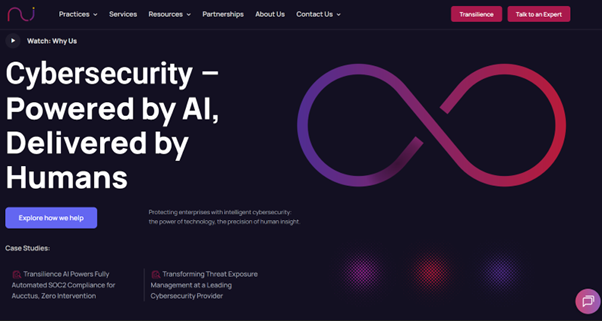
Network Intelligence Transilience AI Agent for Cybersecurity
Network Intelligence is a cybersecurity services and solutions firm that embeds Transilience AI, its proprietary agentic AI platform, into its offerings.
Network Intelligence owns your security outcomes by combining the domain expertise of over 500 security professionals with AI automation, so compliance, detection, and vulnerability programs become more managed and outcome-driven.
Transilience AI is the platform’s agentic model that provides:
- Smart vulnerability prioritization
- Audit automation
- AI-driven threat intelligence
Key features of Network Intelligence – Transilience AI
- Cybersecurity AI consultant for Q&A: An “AI Reasoning” workspace that transforms queries, scans your policy/control libraries, cites authoritative documents, and outputs executive summaries that can help with things like accelerating audit responses and control verification.
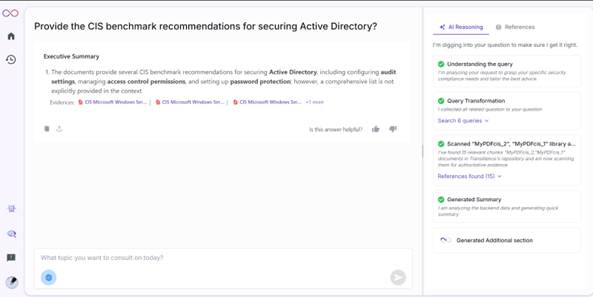
Transilience Cybersecurity AI Consultant
- Breach advisory intelligence: Daily, severity-tagged advisories with industry/region impact and downloadable IOCs that are built for fast stakeholder alerts, targeted patching, and board-ready reporting.
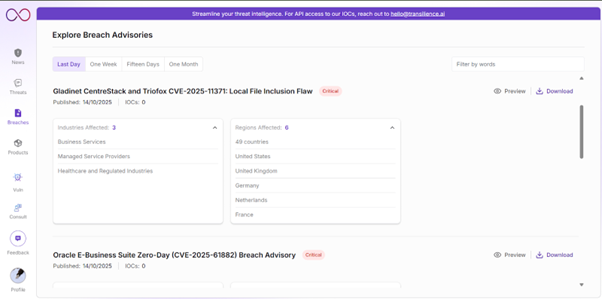
Transilience Breach Advisory Intelligence Dashboard
- Managed compliance automation: Maps controls to SOC 2, ISO 27001, ISO 42001, PCI DSS, HIPAA, and CIS; auto-collects evidence, maintains control health, and prepares auditor-ready packages continuously.
- Continuous evidence collection: Pulls configs, logs, and tickets from your stack; timestamps, normalizes, and links each artifact to a control for audit traceability.
- Threat intelligence workspace: Live threat briefs that map affected products and geographies, with preview/exportable IOCs, streamline blocklists, provide detection updates, and prioritize mitigations.
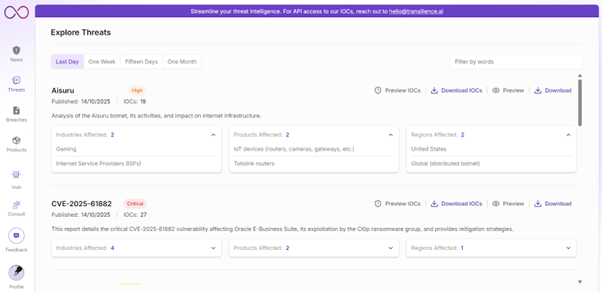
Transilience Threat Intelligence Workspace
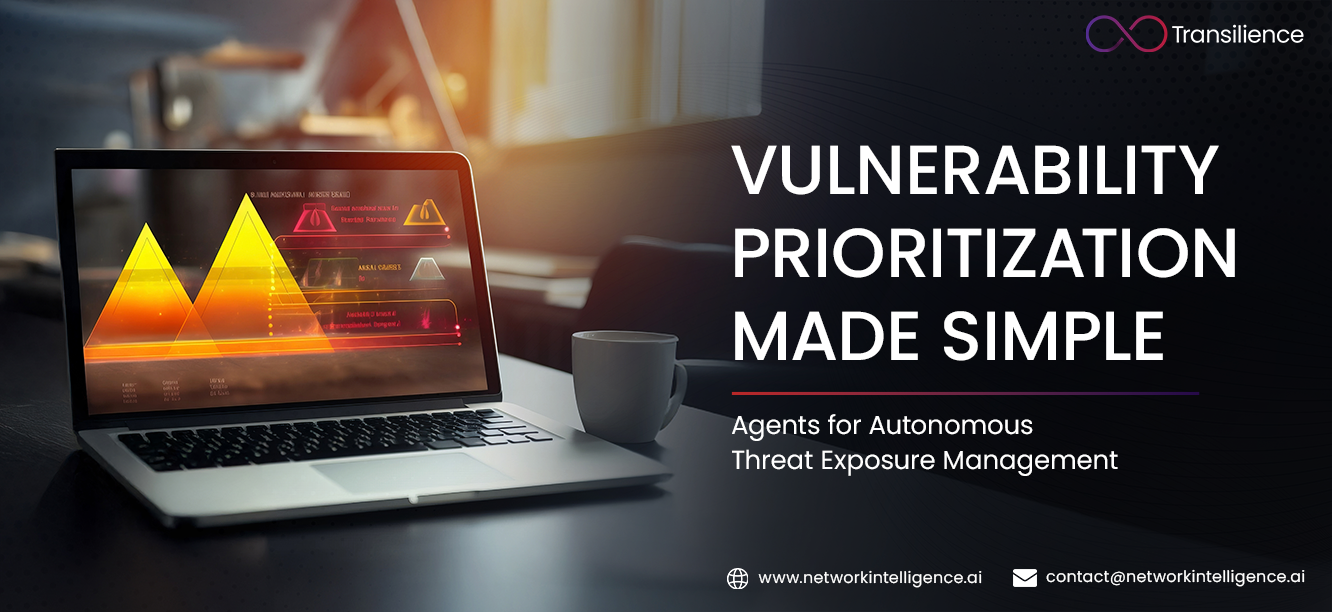
- Vulnerability prioritization engine: De-duplicates scanner findings, filters false positives, applies contextual risk scoring (asset criticality, exploitability, exposure path), and generates a ranked remediation queue.
What users say, Vincent Atallah
“Thanks to Transilience, we got SOC2 certified without hiring any security staff. Their AI agents monitored the situation, collected evidence, and proactively alerted us. We stayed focused on building our product.” – President, Aucctus.
2. Palo Alto Networks
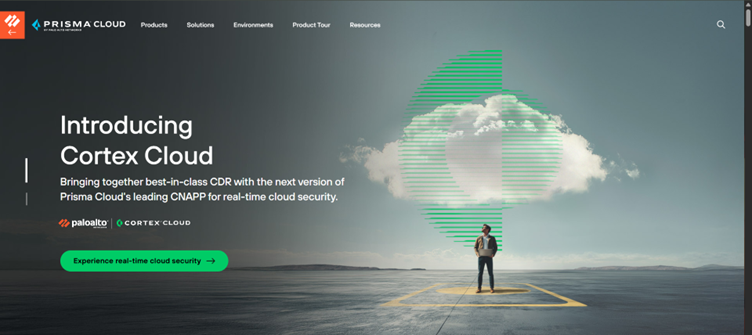
Palo Alto Networks Prisma Cloud Security Solution (Source: Palo Alto Networks)
Prisma Cloud is Palo Alto Networks’ code-to-cloud platform that uses precision AI to correlate risks from source code through build, deploy, and runtime, then blocks active attacks in real time. .
Key features of Palo Alto Networks’ AI cloud security
Here are its main AI-driven features and how they operate:
- Unified cloud protection (CNAPP): Combines posture management, workload protection, and identity analysis into one ai-driven platform.
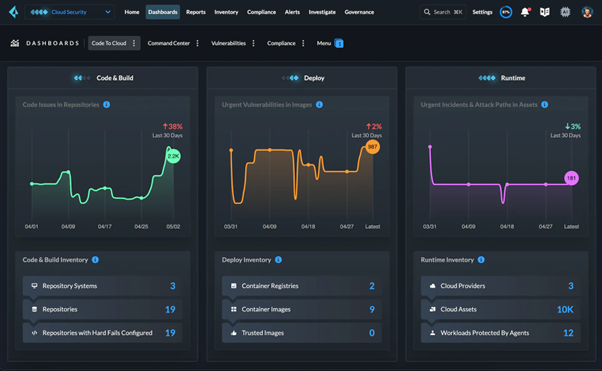
Prisma Cloud dashboard showing visibility across code, deploy, and runtime stages and vulnerability management (Source: Palo Alto Networks)
- AI-powered risk prioritization: Uses Precision AI to analyze large telemetry data and model the blast radius of at-risk assets.
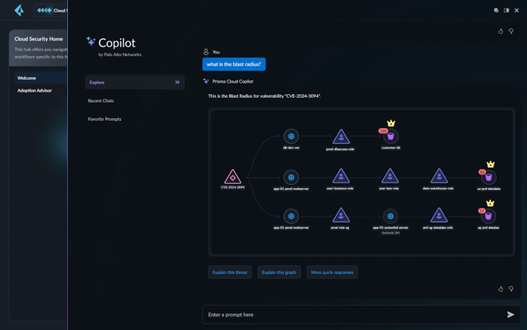
Palo Alto Networks – Prisma Copilot assessing risk blast radius (Source: Palo Alto Networks)
- Prisma Cloud Copilot: An interactive AI assistant that enables conversational investigation and guided remediation across cloud environments.
What users like
- A user commended its AI detection efficiency
“What I found most helpful is that the next-gen firewall leverages machine learning and AI to detect zero-day threats and APTs.” – Victor C. | SOC Analyst.
What users don’t like
- Users have expressed concerns about the navigation complexity on some cloud platforms and the associated increased costs.
“Deployment of the appliance software in a cloud deployment is fairly complex, especially with availability in mind, given that appliances are stateful in nature when compared to a managed CSP offering. Also, the costs can run pretty high based on the package selection.” – Verified User.
3. Wiz
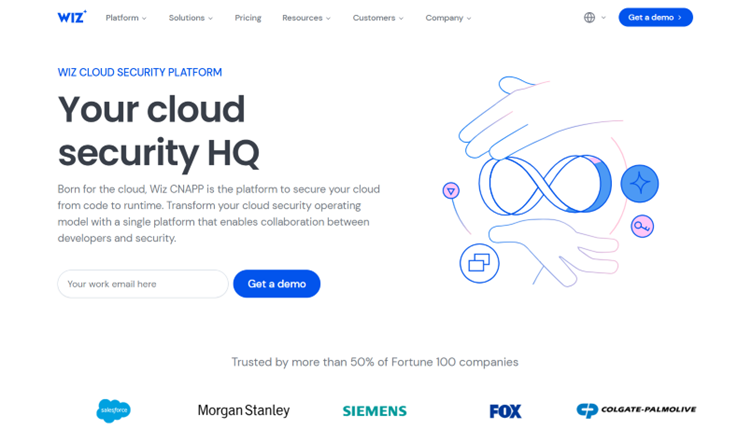
Wiz Cloud Security solution (Source: Wiz)
Wiz Cloud is a cloud-native application protection platform (CNAPP) that secures everything from code to runtime. It uses an agentless architecture, a real-time Security Graph, and AI-assisted workflows to surface and fix the riskiest issues across AWS, Azure, and Google Cloud.
Key features
- Security graph and attack-path context: Correlates vulnerabilities and misconfiguration to show the most dangerous paths attackers could take, so teams can prioritize by real business impact.
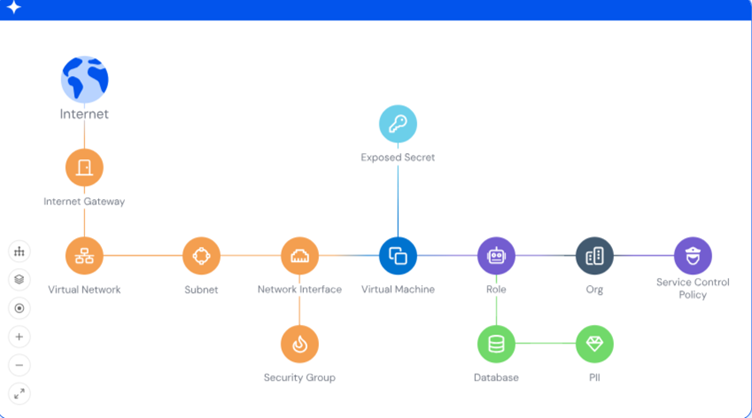
Wiz security graph (Source: Wiz)
- Code-to-cloud correlation: Automatically links running resources back to the code, pipeline, and developer that created them and offers one-click fixes via pull requests.
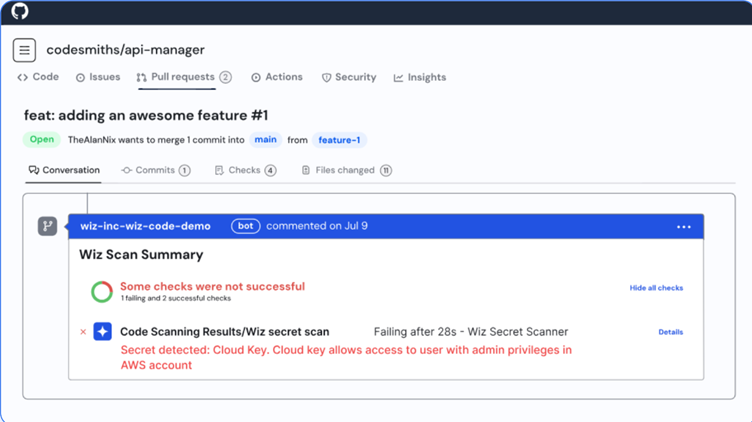
Wiz code-to-cloud correlation (Source: Wiz)
- Cloud-to-code hardening: Captures full context and automated forensics so responders trace incidents from detection back to the originating code and CI/CD change.
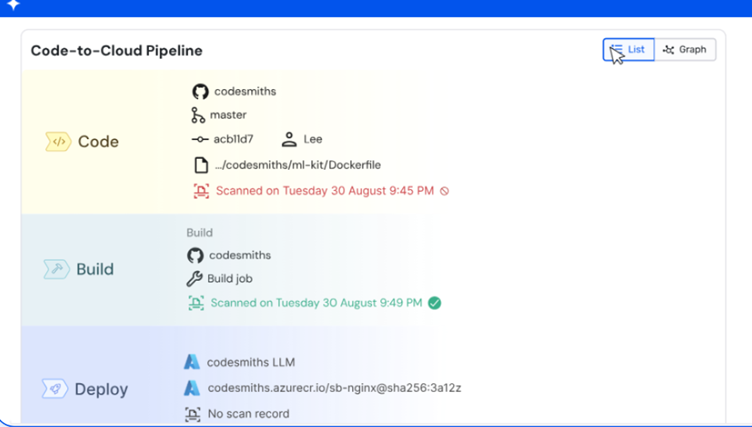
Wiz cloud-to-code hardening (Source: Wiz)
- AI-assistant: Query cloud postures, generate policies, and get context-aware fix guidance using Wiz’s MCP/Mika AI capabilities.
Wiz AI-assistant interaction (Source: Wiz)
What users like
- A user commended its efficiency with risk management:
“AI detection and with advance licences it has more functionality… CSPM is a core value adding in our organization, it is benefiting to identify risk and compliance, it is helping us and also helping in IR activity. Excellent tool and support to work.” – Shivaprakash T.
What users don’t like
- Some users complained about its user interface:
“UI performance is not that great and it lags at times when you use heavy search queries.” – Rajesh R.
4. Upwind
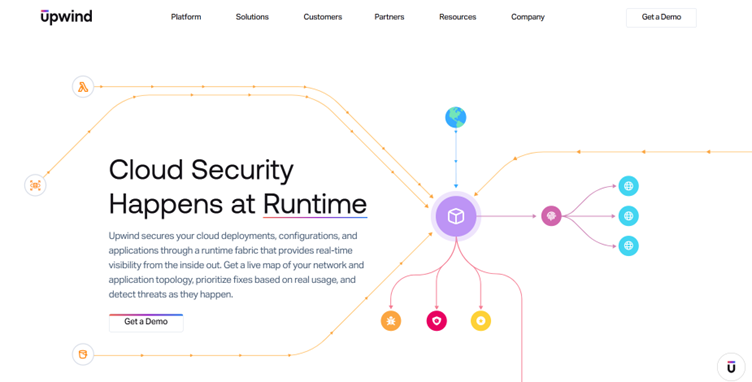
Upwind Cloud security solution (Source: Upwind)
Upwind is a runtime-powered CNAPP with Cloud Detection & Response (CDR). It builds a real-time “inside-out” view of your cloud, prioritizes risks using runtime facts, and detects active threats across AWS, Azure, and Google Cloud.
Key features
- Security graph: Visualizes every relationship across workloads, identities, and data paths to uncover real attack routes in real time.
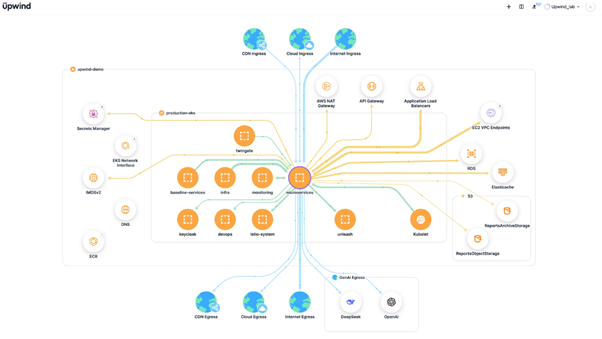
Upwind security graph tree (Source: Upwind)
- Attack path analysis: Prioritizes toxic combinations of risks and highlights which findings create the most exploitable paths so teams can act fast.
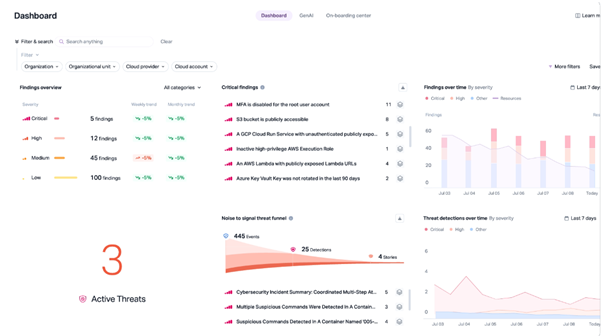
Upwind attack analysis dashboard (Source: Upwind)
- Risk and vulnerability prioritization: Traces runtime vulnerabilities back to their source code or build pipeline, enabling developers to fix vulnerabilities permanently at the origin.
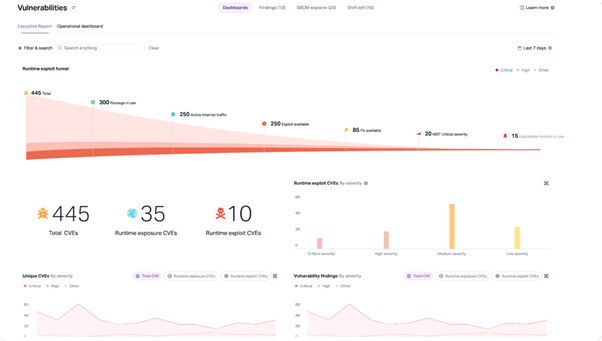
Upwind’s vulnerability funnel and runtime exploit summary (Source: Upwind)
- Cloud detection and response: Baselines cloud, network, and app flows to surface threats fast; adds API threat detection as part of a broader CADR approach.
What users like
- A user praised its UI features:
“The graphics are really good, it is easy to spot resources and threats within the product.” – Verified User.
What users don’t like
- A user complained about its runtime sensors:
”The runtime sensors may require resource allocation tuning.” – Verified user.
Other Noteworthy Providers
Vectra AI
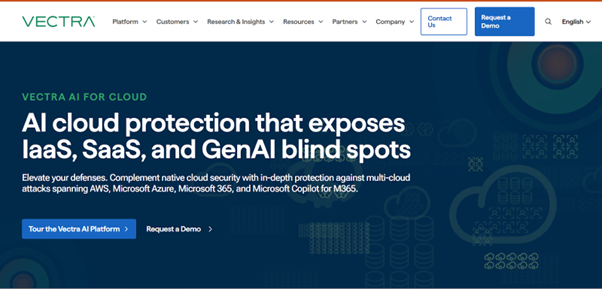
Vectra AI for Cloud protection (Source: Vectra AI)
Vectra applies AI and ML to detect attacker behavior across network, identity, and cloud vectors, connecting the dots of lateral movement and privilege escalation. Their Attack Signal Intelligence prioritizes alerts and enables automated response across AWS, Azure, SaaS, and hybrid estates.
Checkpoint CloudGuard
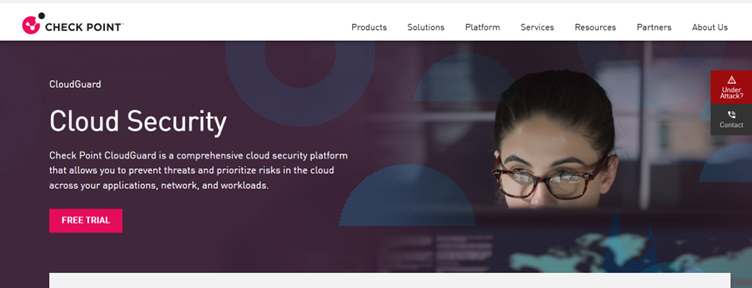
Checkpoint CloudGuard CSPM Solution (Source: Checkpoint)
Check Point CloudGuard is a cloud-native security platform that uses AI-driven posture management and threat prevention to protect assets across AWS, Azure, GCP, and Kubernetes. It uses machine learning and Check Point’s ThreatCloud AI to correlate cloud telemetry and block emerging threats before execution.
Factors to Consider When Choosing an AI Security Provider
1. Telemetry coverage and data quality
Choose a provider that unifies logs from cloud, endpoint, identity, and SaaS environments in real time and normalizes them automatically. According to Verizon’s Data Breach Investigations Report, incidents spanning multiple environments are the hardest and costliest to contain.
2. Detection accuracy and explainability
Assess how models rank exposures (exploitability, blast radius, business impact), how they reduce noise, and how they explain decisions (attack story, causal chain, confidence). You want fewer, better alerts you can justify to auditors and executives.
3. Safe automation and human control
Insist on “human-in-the-loop” modes, rollback, rate-limits, change windows, and policy simulation before enforcement. Ask how agentic workflows are sandboxed to avoid runaway actions.
4. Identity-first protection
Credential misuse causes about 88% of breaches in web application attacks, so the platform must analyze identity and access paths deeply, covering privilege escalation, dormant accounts, and machine identities, including AI agents.
5. Governance for AI and LLM usage
The provider should offer visibility into AI models, data pipelines, and unsanctioned AI tools and packages. A study revealed that 77% of GenAI users paste sensitive data into AI tools,, with 82% of these instances originating from unmanaged accounts.
6. Depth of multicloud protection
Ensure the solution supports AWS, Azure, and Google Cloud at a granular level, covering native services, IAM, KMS, and Kubernetes configurations.
7. Response speed and latency
Measure the speed at which the system detects, prioritizes, and delivers an actionable case following a risky change. Too much latency materially affects breach impact and the ability to detect and contain breaches faster, directly lowering breach costs.
8. Ecosystem openness
Favor open integrations and export options over proprietary lock-ins. Platforms that integrate smoothly with your SIEM, data lake, and ticketing tools reduce the total cost of ownership and simplify governance.
What of compliance and regulatory alignment?
Compliance is the most important factor in choosing an AI security provider. The EU AI Act will be fully applicable in 2026, while NIST AI RMF and ISO/IEC 42001 are rapidly becoming global benchmarks for trustworthy AI.
Providers that align with these standards, automate evidence collection, and support regional data residency should be a priority, as this can help organizations accelerate onboarding and avoid costly audit delays.
Regulation of data packets is extremely important. Organizations must confirm with providers as to where their data is stored, processed, and trained.
Platforms offering on-region data options and anonymization controls facilitate compliance with frameworks such as the EU AI Act.
Best practices for deploying AI security in cloud environments
- Integrate AI security from design: Embed AI and ML threat models into your CI/CD pipelines and infrastructure-as-code reviews. Early integration ensures vulnerabilities and misconfigurations are caught before they scale into production.
- Establish unified telemetry and context correlation: Centralize logs from endpoints, identity systems, APIs, and workloads into a single AI analytics layer. Unified data enables models to understand relationships, which is critical for detecting subtle attacks or AI model abuse.
- Align AI-driven automation with zero-trust principles: Every automated action should respect least-privilege access and policy validation. This prevents agentic or autonomous processes from exceeding the intended scope.
- Continuously validate models and automation outcomes: Periodically red-team your AI detections, retrain models with fresh data, and review false positives/negatives. Continuous validation keeps models adaptive and compliant with evolving risks.
- Map AI security metrics to business outcomes: Define measurable goals, such as mean time to detect (MTTD), alert accuracy, and compliance coverage.
Common pitfalls and how to avoid them
- Deploying without clear governance boundaries: Without defined accountability, AI-driven decisions can cause compliance or operational errors.
Governance policies must define what AI can decide and what still needs human oversight.
- Neglecting model explainability and audit trails: AI that cannot explain its actions invites regulatory and operational risks.
Use solutions that provide contextual reasoning and maintain audit logs for every automated action.
- Ignoring cross-functional collaboration: AI security should not be treated as another IT or SOC project.
Involve DevOps, compliance, and data governance teams early to ensure consistent visibility, accountability, and secure data handling across departments.
Conclusion
The more enterprises accelerate cloud adoption and integrate AI into their workflows, their digital footprint and attack surface expand exponentially.
The same algorithms that drive automation and productivity are now being mirrored by threat actors using AI to scale reconnaissance, evade defenses, and launch precision attacks at speed.
This is why robust, AI-driven cybersecurity is no longer optional.
It is the only way to match intelligence with intelligence, by automating vigilance, contextualizing risk, and maintaining resilience in real time across a cloud ecosystem that never sleeps.
Talk to an Expert at Network Intelligence to understand how AI-powered protection can secure your cloud environment, simplify compliance, and future-proof your organization against the next wave of threats.