


Many teams pursuing Azure HITRUST compliance tend to make the same mistake early. It is easy to assume that because Azure already holds HITRUST-related attestations, their own cloud environment is close to being HITRUST-certified.
It is NOT.
Azure gives you a stronger starting point with better control mappings and useful security services. However, HITRUST certification depends on your scoped systems, policies, evidence, identity model, logging discipline, vendor relationships, and your ability to show that controls are effective.
This is why organizations now combine Azure’s native capabilities with specialized support from providers like Network Intelligence to automate controls, keeping HITRUST compliance continuously validated.
What is HITRUST
HITRUST is the organization behind the HITRUST Common Security Framework (CSF), which is a certifiable security and privacy framework designed to unify multiple regulatory requirements into one control structure.
The HITRUST framework consolidates standards such as HIPAA, NIST, ISO, and PCI into a single system. Instead of building separate programs for each demand signal, organizations can use one mapped framework to assess once and report many times.
| For example, how would HITRUST help organizations become HIPAA-compliant?
HIPAA is a United States federal law. HITRUST is not the law. It, however, can help organizations demonstrate alignment with HIPAA-related safeguards. HIPAA tells regulated entities what they must protect; HITRUST provides a more prescriptive framework for demonstrating that those protections exist and operate. So, a company can be subject to HIPAA without being HITRUST certified. A team can pursue HITRUST because customers or partners demand a stronger assurance signal than “we say we are compliant.” For healthcare, third-party service providers, and, increasingly, any vendor in regulated procurement chains, HITRUST often becomes the trust layer on top of legal compliance programs. |
What is HITRUST Certification
It is the formal validation that organizations pursue after being assessed against the HITRUST framework using HITRUST’s defined assessment and independent review process.
Types of HITRUST assessments
HITRUST currently offers three main assessment and certification paths:
1. e1 assessment
The e1 is a 1-year validated assessment for foundational cybersecurity and is based on 44 controls. It is the lightest assessment path and is ideal for startups and companies with limited risk profiles or less complexity.
2. i1 assessment
The i1 is a 1-year validated assessment for organizations ready to demonstrate stronger, threat-adaptive security practices and uses 182 controls. It is more suited for organizations with more robust security programs that want to demonstrate leading security practices. Most of its controls are focused on implementation and threat adaptability.
3. r2 assessment
The r2 is the highest-assurance option, valid for 2 years, and is fully risk-based and customizable based on scope and risk factors. It is advisable for organizations with complex systems or elevated risk exposure. It evaluates policy, procedure, and implementation across a broader set of controls.
| Note: There is an important process distinction between a readiness assessment and a validated assessment for HITRUST certification.
The readiness phase is optional and useful for identifying gaps before formal validation. The validated assessment, on the other hand, involves an authorized external assessor and produces the authoritative assurance report tied to certification. |
Who needs HITRUST certification
Organizations that handle sensitive data, operate in regulated ecosystems, or sell into procurement environments where assurance depth is a priority.
Examples include highly regulated industries and organizations entrusted with sensitive information, such as healthcare, finance, and technology.
In healthcare, this usually includes
- Providers,
- Health plans,
- Digital health vendors,
- SaaS platforms handling ePHI,
- Analytics partners,
- Managed service providers, and
- Business associates that need stronger trust signals.
The HHS makes it clear that covered entities and business associates have direct HIPAA obligations. HITRUST is often pursued because those same organizations need a certifiable way to show security maturity to customers and partners.
Outside healthcare, those who need HITRUST certification increasingly include:
- Vendors selling to healthcare
- Regulated fintech and insurtech firms
- Cloud-native data processors, and
- Third parties trying to reduce security questionnaire fatigue.
If customer due diligence continues to expand and every enterprise buyer asks for deeper evidence, HITRUST certification can reduce the inquisition and serve as a commercial accelerator.
How much does HITRUST certification cost
The program is made up of multiple cost layers that vary based on scope, assessment type, and operational maturity.
The HITRUST organization states that the total cost includes three primary components (what you are actually paying for):
1. MyCSF platform subscription
HITRUST requires organizations to use its MyCSF platform to manage assessments and certification workflows. Subscriptions typically start at $18,100 and could increase with scope and usage.
2. Assessment report fees
HITRUST charges fees tied to assessment outputs starting at $3,625. Validated assessment report pricing is not publicly standardized, but scales with the assessment type.
The estimated cost breakdown (2025-2026):
- HITRUST e1 (Essential – Low Risk): $30,000 – $40,000+
- HITRUST i1 (Implementation – Moderate Risk): $50,000 – $80,000+
- HITRUST r2 (Risk-based – High Risk): $75,000 – $250,000+
3. Independent external assessor fees
This is often the largest direct cost line item, especially for r2 assessments. Aside from assessment type or complexity, HITRUST pricing also depends on:
- Number of systems in scope: More systems, applications, and data flows mean more controls and evidence required.
- Timeline constraints: Compressed timelines can increase internal labor and consulting costs.
-
- Remediation maturity: If the environment is not aligned with HITRUST, engineering effort increases, and multiple retests become likely.
- Control inheritance (especially on Azure): This can reduce costs because infrastructure controls are already in place, and some compliance burden is shared.
Each of these scales also varies in how prepared your organization is before assessment begins. So, some of the common cost components associated with this are estimated to be:
- Readiness assessment: $10,000 – $30,000 (pre-assessment to identify gaps).
- Consulting/remediation: $50,000 – $150,000+ (fixing security gaps).
- Final validated assessment: $100,000 – $250,000+ (official audit).
- Technology investments: $25,000 – $75,000+ (new security tools).
What is the ROI of HITRUST Certification
HITRUST certified environments reported a 0.59% incident rate in 2024, meaning 99.41% remained breach-free.
But the strongest economic case currently comes from HITRUST’s publication of an ESG-backed economic validation study.
The report modeled a 464% ROI, with benefits including revenue growth, operational savings, avoided cyber insurance costs, and reduced risk.
The data report showed that about organizations saw:
- About 63% improvement in audit activities
- Up to $9.77 million in potential breach-related savings
- A 25% reduction in cyber insurance premiums
- Drop in audit cycles from 90 to 60 days
- Spikes of up to 50% of annual revenue are being attributed to certification
Now, our view is that these numbers are useful and plausible, but may not be indicative of universal return. However, when certification can improve procurement trust and avoid expensive cloud-security drift in regulated environments, then it is definitely worth having.
This interpretation becomes even more credible on Azure. Why?
Well, if your Azure environment already provides mature policy, logging, identity, encryption, and backup primitives, the delta between the current state and the certifiable state may be smaller. This is especially true compared to a fragmented environment.
In that case, Azure HITRUST compliance can be both a certification exercise and a force multiplier on controls that should have been operationalized anyway.
Applicability of HITRUST Compliance on Azure
| Azure HITRUST certification refers to achieving HITRUST compliance for workloads hosted on Microsoft Azure by aligning cloud architecture, configurations, and operational controls with the HITRUST CSF requirements. |
Microsoft Azure was one of the first hyperscale cloud platforms to receive formal HITRUST CSF certification in November 2016, and has maintained that certification since then.
That gives customers a stronger inherited control foundation than many environments start with. But inherited platform assurance is not the same as customer certification.
Azure Policy mappings for HIPAA/HITRUST are only a partial view of the overall compliance status. Azure provides built-in initiative definitions that map controls and domains by responsibility category, including customer, Microsoft, and shared responsibility.
So it’s important to make sure your scoped Azure environment is architected, operated, and evidenced in a way that meets your chosen HITRUST assessment requirements.
Azure gives you mature control surfaces, monitoring, encryption, backup, and compliance visibility that can reduce the effort required to implement many controls within the HITRUST framework.
But Azure does not remove customer responsibility for access design, segmentation, secret hygiene, logging completeness, incident workflows, vendor oversight, and evidence collection.
Key Azure Services for HITRUST compliance
1. Microsoft Defender for Cloud
Continuous posture monitoring is non-negotiable for compliance management. Defender provides dashboards to operationalize ongoing control visibility and progress tracking inside Azure across assigned standards.
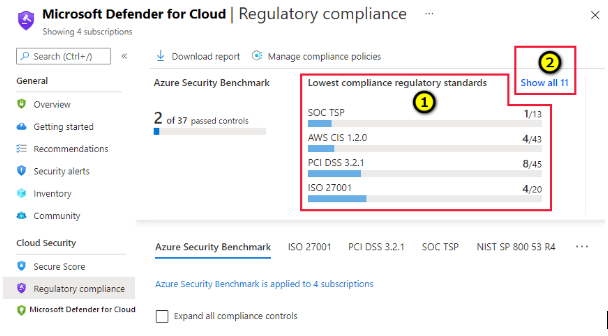
View Microsoft Defender for Cloud compliance scores across regulatory standards (Source: Microsoft)
2. Microsoft Entra ID
An identity and access management platform that supports authentication, authorization, and conditional access controls is required for HITRUST certification. Entra ID provides guidance for HIPAA-related compliance and access controls, including the need for unique user identification and broader identity-related safeguards.
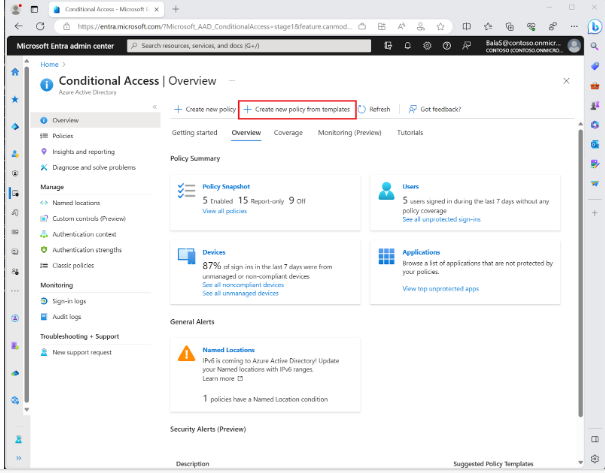
Microsoft Entra ID Conditional Access policies for compliance enforcement (Source: Microsoft)
3. Azure Key Vault
Secure management of secrets, encryption keys, and certificates aligned with HITRUST encryption and key management requirements. Microsoft recommends using Key Vault with network restrictions, private endpoints and managed identities instead of hard-coded credentials and defining key and certificate lifecycle controls. Defender for Cloud and Azure Policy can also monitor and enforce parts of this posture.
Secret keys to securely store sensitive data, such as passwords, keys, and tokens,s with strict access controls with Azure Key Vault (Source: Informatica Community)
4. Azure Monitor and Log Analytics
HITRUST certification requires provable control operation. Customers can aggregate security data via Azure Monitor, use Log Analytics workspaces for analytics, and enable diagnostic settings for audit, security, and diagnostic logs.
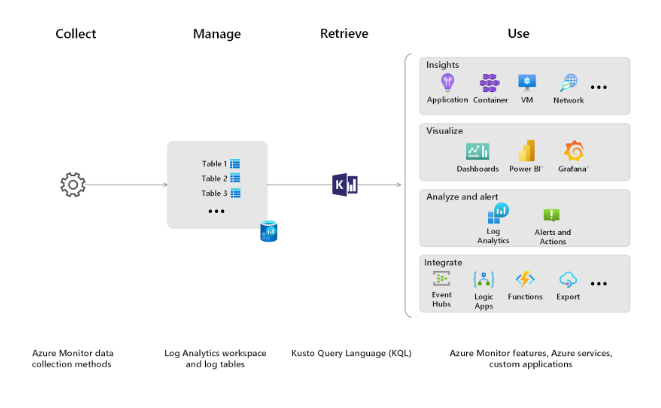
How Azure Monitor Logs work (Source: Microsoft)
Organized data store tables to collect and analyze insights for business reports with Azure Monitor Logs (Source: Microsoft)
5. Azure Backup
Recoverability and encryption controls are part of any serious cloud compliance program. Azure Backup automatically encrypts backup data at rest using Azure Storage encryption with 256-bit AES and transfers backup data over HTTPS.
Organizations can make use of customer-managed keys stored in Azure Key Vault for backup data in Recovery Services vaults.
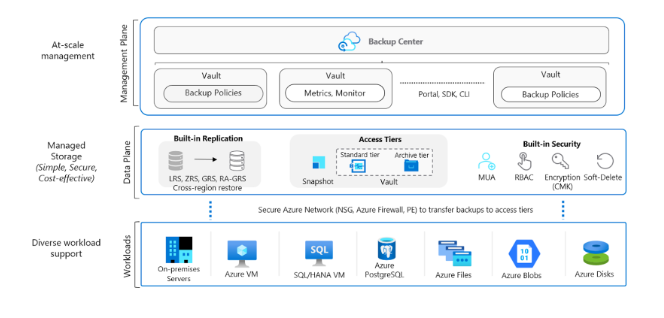
How Azure Backup architecture works (Source: Microsoft)
6. Azure Disk Encryption
Microsoft’s encryption virtual machine (EVM) disks help protect data at rest. It integrates native encryption technologies like BitLocker for Windows and dm-crypt for Linux with Azure Key Vault for key management. It helps organizations meet compliance requirements by safeguarding VM disks and managed disk snapshots.
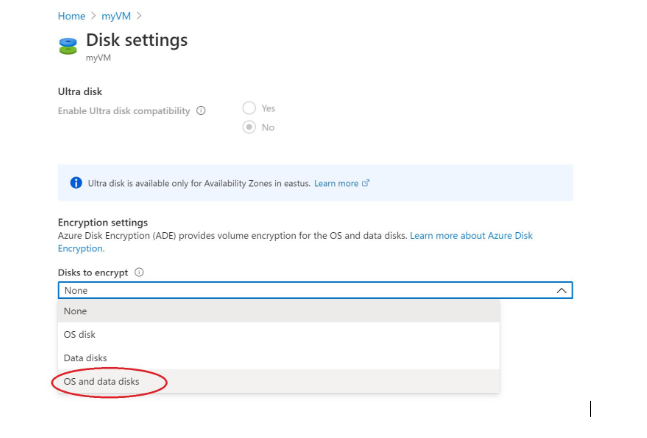
Create and encrypt a Windows VM within Azure with Azure VM (Source: Microsoft)
7. Azure Firewall
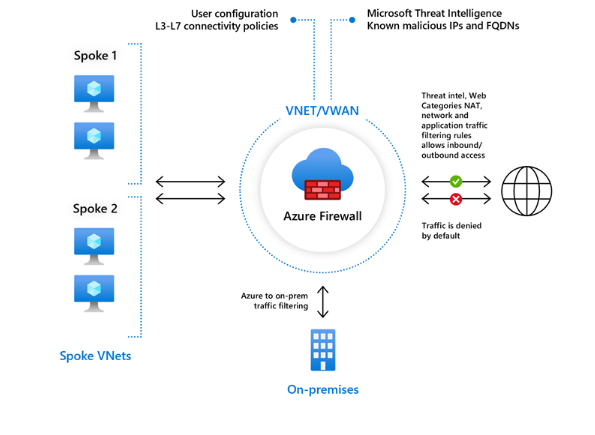
Access to a fully stateful firewall that inspects both north-south (inbound/outbound) and east-west (internal) traffic. It offers built-in high availability and unlimited cloud scalability. Policies can be applied centrally across multiple virtual networks and regions using Azure Firewall Manager.
The firewall integrates with Azure Monitor for logging and analytics and can inspect encrypted traffic through Transport Layer Security (TLS) inspection.
How Azure Firewall works (Source: Microsoft)
8. Azure DDoS protection
Detect and mitigate distributed denial-of-service (DDoS) attacks against applications hosted on the Microsoft Azure platform. It provides adaptive, always-on network monitoring to maintain application availability and resilience against volumetric and protocol attacks against private data.
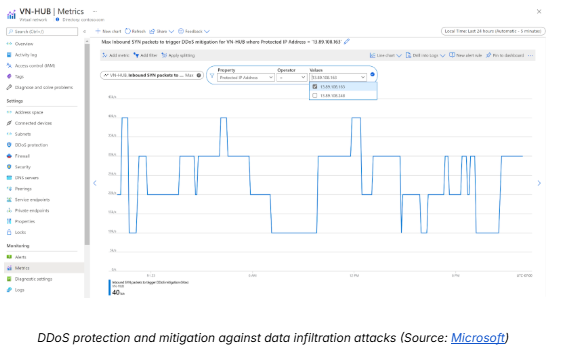
DDoS protection and mitigation against data infiltration attacks (Source: Microsoft)
9. Azure Blueprints
A governance tool that enables cloud architects and administrators to define, deploy, and manage repeatable, compliant artifacts in the Azure cloud. These artifacts include ARM templates for infrastructure, Azure Policy assignments for compliance, and Azure RBAC roles for access control.
Once defined and published, a blueprint can be assigned to one or more subscriptions, ensuring standardized deployment that aligns with corporate or regulatory requirements.
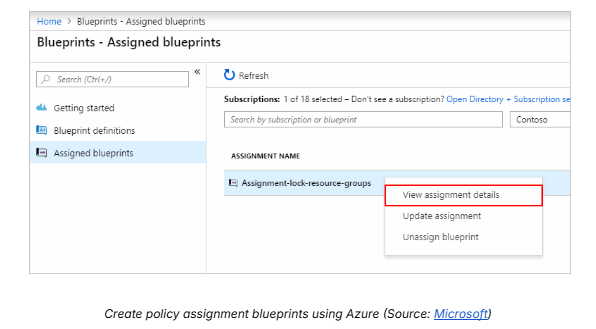
Create policy assignment blueprints using Azure (Source: Microsoft)
Steps to achieve Azure HITRUST certification
To get HITRUST certified on Azure, follow this set of disciplined actions:
- Start by defining the exact Azure scope: Decide which subscriptions, workloads, data stores, applications, identities, and third-party dependencies are in scope. If you cannot draw the boundary cleanly, the rest of the assessment will have issues.
- Next, choose the assessment type that matches your risk and business objective: Do not overbuy r2 if an e1 or i1 addresses your current assurance need. But do not underbuy e1 if your buyers, regulators, or data volumes will force r2-level scrutiny anyway.
- Map the scoped Azure environment to the HITRUST framework: Use Azure Policy mappings, service baselines, and responsibility assignments to determine where the platform helps. Figure out where your configuration is the control, and where non-technical processes still need to be built outside Azure.
- After that, run readiness: HITRUST describes readiness as optional, but in reality, it is often what separates efficient certifications from painful ones. This is where you identify gaps, generate corrective actions, and prove that controls are deployed and, more importantly, stable.
Only then should you move into validated assessment with an authorized external assessor.

| Download our HITRUST Implementation Guide to build a smarter path to certification |
Best Practices for a HITRUST Compliant Azure Cloud
- Make it a point to build for shared responsibility: Azure’s own documentation repeatedly distinguishes Microsoft-owned, customer-owned, and shared controls. So your Azure HITRUST compliance model should start with a control ownership matrix.
- Ensure that policy enforcement is native: Use Azure Policy to translate HITRUST certification requirements into measurable guardrails. This helps reduce drift and produce more defensible evidence.
- Harden identity before you harden paperwork: For most organizations trying to get HITRUST certified, weak access control, inconsistent role design, and poor privileged access hygiene create more friction than missing documents. Microsoft’s Entra and HIPAA safeguard guidance make it clear that identity configuration is foundational.
- Always keep secrets off the application layer and inside hardened services: Microsoft’s guidance on protecting secrets emphasizes encryption at rest and in transit and using Azure Key Vault as the secure store for secrets, keys, and certificates.
- Encourage the culture of evidence-first logging: Centralize logs, enable diagnostic settings broadly, define retention, and make sure the organization can prove who changed what, when, and where.
- Design backup, recovery, and key management as certifiable processes: Encryption defaults help, but the stronger posture comes from combining protected backups, CMK strategy where justified, and monitored key lifecycle management.
Achieving Secure and Compliant Cloud Environments with Network Intelligence
Common challenges that we found organizations face when pursuing HITRUST compliance with Azure include:
- Trouble mapping the HITRUST framework to Azure environments
- Issues with keeping up with continuously validating controls
- Struggle to maintain audit-ready evidence
- Properly managing vendor and identity risk
- Too much compliance overhead
Network Intelligence addresses all of this by combining domain expertise with AI-driven automation.
We provide HITRUST compliance and audit services to companies that need to strengthen data security and build better trust with their customers.
Through Transilience AI, the platform applies multi-agent intelligence to:
- Continuously monitor Azure environments against HITRUST certification requirements
- Automate evidence collection across identity, infrastructure, and data layers
- Map controls directly to operational signals instead of static documentation
- Identify gaps in real time and prioritize remediation
- Maintain a living compliance posture instead of point-in-time readiness
Instead of preparing for certification cycles, organizations operate in a state where certification becomes a natural outcome of how the system runs.
If you are evaluating Azure HITRUST compliance or planning how to get HITRUST certified and need an experienced partner to walk you through, connect with our expert HITRUST Certification Advisor today.