


Three terms get used almost interchangeably in security procurement conversations: Automated Security Validation, Breach and Attack Simulation, and penetration testing. Vendors in each category borrow language from the others, which makes it genuinely hard to tell what a tool actually does until it’s already been bought.
They are not the same thing, and the difference matters for what you can trust each one to tell you.
Penetration testing: human-led, exploit-driven, point-in-time by default
A penetration test is an authorized attempt to compromise a defined scope the way a real attacker would, chaining weaknesses together to show actual business impact rather than listing theoretical ones. Traditionally, this is manual, skilled, and expensive, which is why it’s usually scoped to a window once or twice a year.
What it proves: a specific attack path was achievable, in this environment, during this window, by this operator.
What it doesn’t prove: that the same path is still closed six months later, or that something new hasn’t opened up since.
Breach and Attack Simulation: controlled, repeatable, detection-focused
BAS tools run predefined attack scenarios, mapped to known techniques such as MITRE ATT&CK, against production or production-like environments on a repeatable schedule. The goal is usually different from a pentest: BAS is less about finding a new path to compromise and more about checking whether existing security controls, detection rules, and response processes actually catch known attack patterns when they happen.
What it proves: whether your detection and prevention controls respond correctly to a known, simulated technique, run consistently over time.
What it doesn’t prove: novel attack paths outside the simulated technique library, or business-logic flaws a predefined scenario wouldn’t think to try.
Automated Security Validation: continuous, exploit-driven, broader scope
Automated Security Validation sits closer to penetration testing than to BAS in what it actually does: it attempts real exploitation, chains findings, and validates whether exposure is genuinely reachable, rather than only testing against a fixed library of known techniques. What changes is how often and how broadly it can run. Because agents handle the repetitive reconnaissance and exploitation-attempt work, validation can happen on a continuous or frequent schedule across a wider scope than manual testing hours would normally allow.
What it proves: whether exposures across a broad, frequently-refreshed scope are actually exploitable right now, not just whether known techniques are detected.
What it doesn’t fully replace: the deepest, most creative human-led engagements for novel business-logic abuse and highly targeted red team scenarios.
Side-by-side
| Dimension | Penetration Testing | Breach and Attack Simulation (BAS) | Automated Security Validation (ASV) |
|---|---|---|---|
| Primary question | Can this be exploited, end to end? | Do our controls detect and stop known techniques? | Is this exposure actually reachable and exploitable, continuously? |
| Method | Human-led, manual exploitation and chaining | Automated, predefined technique library | Agent-driven, real exploitation attempts, broader and more frequent |
| Frequency | Typically annual or semi-annual | Scheduled, often continuous | Continuous or frequent, event-triggered |
| Scope | Deep, but limited by available hours | Broad, limited to simulated techniques | Broad, limited mainly by authorization and safety controls |
| Finds novel paths | Yes, strongest here | No, limited to the scenario library | Yes, closer to pentesting than BAS |
| Best evidence for | Deep, creative attack paths; compliance-mandated testing | Control and detection effectiveness over time | Keeping exposure prioritization current between deep engagements |
Where each one actually fits
These aren’t competing choices so much as different instruments for different questions.
- BAS answers, “are our existing controls working against what we already expect?” It’s a detection and control health check, run often, against known patterns.
- Automated Security Validation answers, “what can actually be exploited in our environment right now, across a broad and current scope?” It fills the gap between infrequent manual testing and the pace at which real environments change.
- Human-led penetration testing answers, “what’s the deepest, most creative path an expert could find?” It remains the right tool for novel logic flaws, highly targeted red team exercises, and anything requiring judgment a scenario library or an agent’s current capability doesn’t cover.
A mature exposure program tends to use more than one: BAS or ASV for continuous ground-truth validation, and periodic human-led testing for depth. For how validation fits into the broader prioritization cycle, see our guide to continuous threat exposure management, and for a closer look at the gap between annual and continuous testing, see Continuous vs. Annual Penetration Testing.
Questions worth asking a vendor in any of these categories
- Does it actually attempt exploitation, or does it only check for the presence of a known signature or configuration?
- Is the technique library fixed, or can the tool chain findings in ways nobody predefined?
- How often can it realistically run, and what does that cost in time or license terms?
- What does output look like: a flat list of findings, or an evidence-backed attack path?
- How are destructive or risky actions governed, and can a human stop or approve them?
- Does it integrate with the rest of your exposure and detection stack, or does it produce another standalone report?
Where Kamet fits
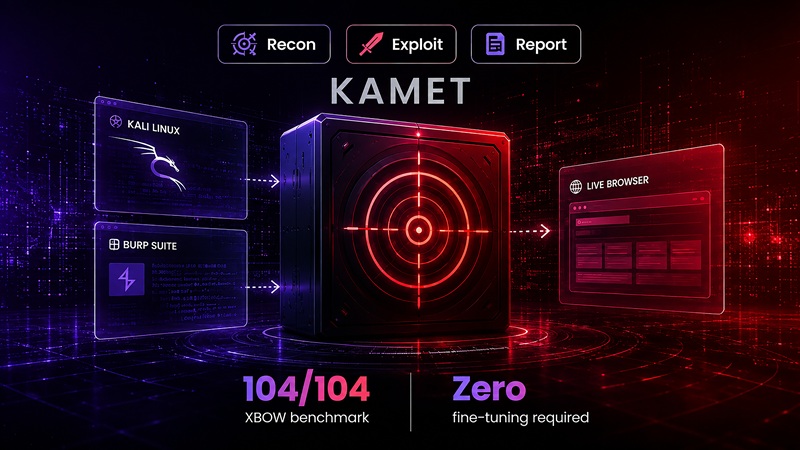
Kamet sits on the Automated Security Validation side of this comparison. It’s an AI agent that drives a real Kali Linux attack box, uses tools like BloodHound and a live web proxy, chains findings into evidence-backed attack paths, and runs broadly enough to validate exposure far more often than manual testing hours would allow, while still requiring explicit human consent for anything flagged as dangerous. For the technical detail, read Inside Kamet’s Attack Box.
Want to know where validation fits in your exposure program? Talk to Network Intelligence.