

Ask anyone who has run a third-party risk program what the job actually feels like, and the answer is rarely “assessing risk.” It’s chasing vendors for overdue questionnaires, re-reading the same SOC 2 report for the fourth time to answer a question it already covers, and watching a risk score sit frozen for months because nobody had time to recalculate it after a control changed.
Network Intelligence’s AI-powered TPRM platform was built around a simple premise: most of that work doesn’t need a human doing it by hand, and the parts that do need a human should take a fraction of the time they currently do.
The dual-portal design
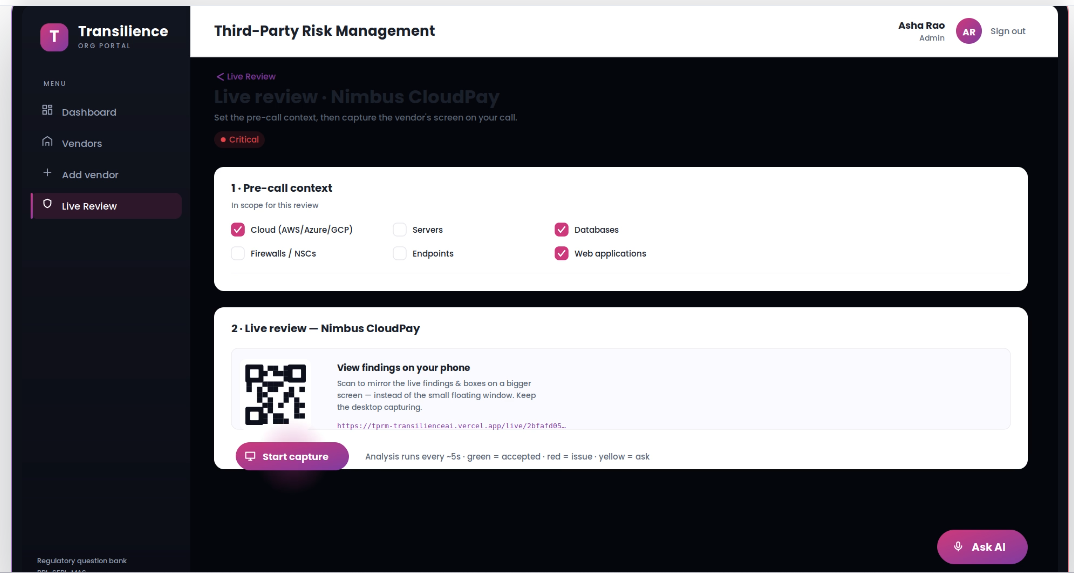
TPRM programs fail at the handoff between the organization asking questions and the vendor answering them. Email threads, spreadsheet versions, and PDF attachments that never quite match up are the norm. This platform runs on two connected portals instead: an organization portal, where a risk team rates a vendor’s criticality and tailors and sends the right questionnaire, and a vendor portal, where the vendor answers, attaches evidence, and submits, all inside the same system rather than bouncing between inboxes.
A risk score that isn’t frozen the day it’s calculated
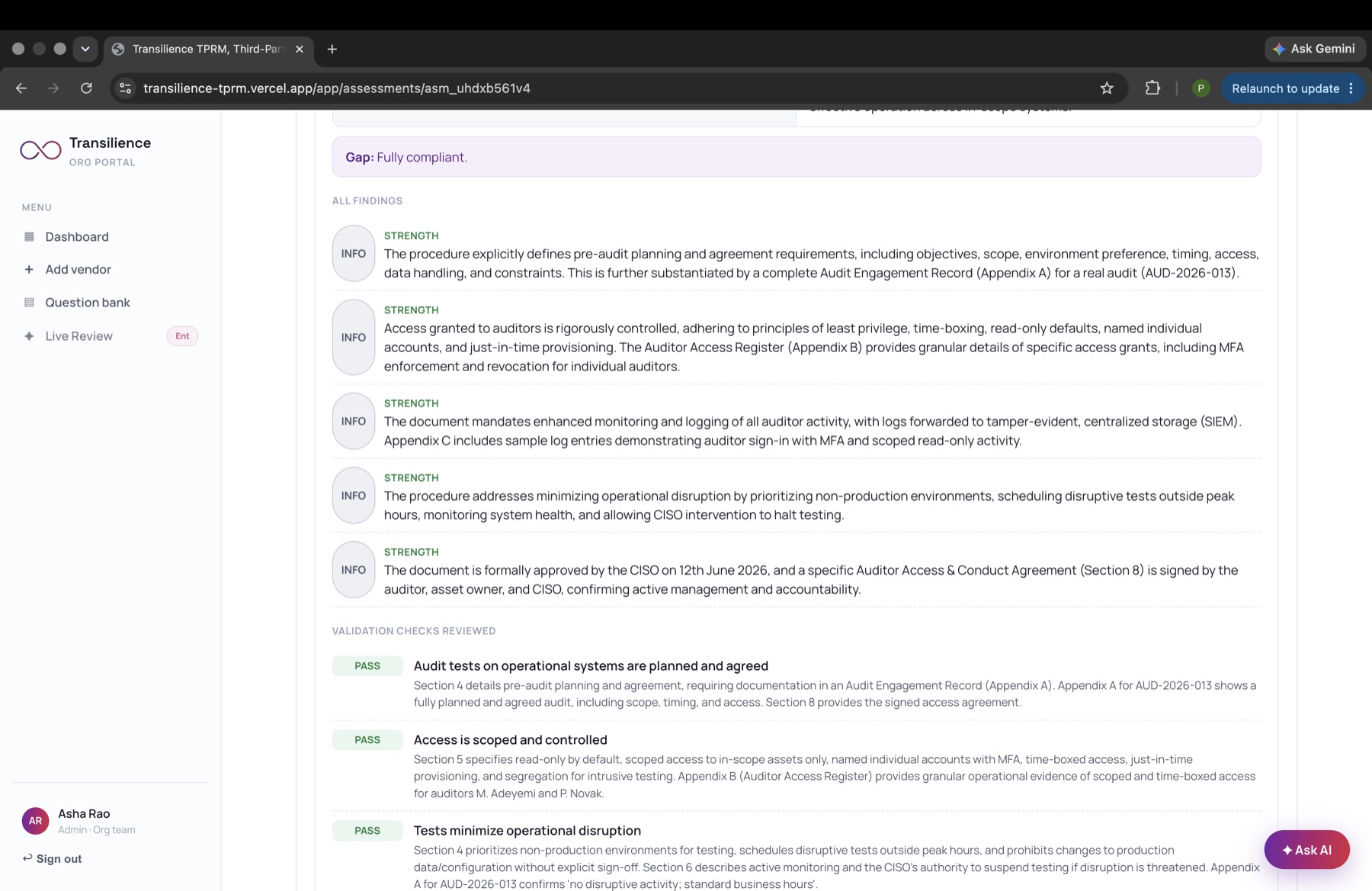
Most TPRM tools produce a risk score once, at onboarding, and it sits there until someone remembers to redo the assessment a year later. Here, the risk engine combines a vendor’s criticality with their demonstrated control maturity into a clamped residual score, ranging from Low to Critical, and it recomputes every time something changes, whether that’s a new answer, updated evidence, or a criticality adjustment. The score reflects where the vendor actually stands today, not where they stood at onboarding.
Answer once, satisfy many
Two things keep this from turning into another 300-question slog for the vendor. First, smart tailoring pulls from a bank of roughly 1,900 questions and sends only what’s relevant to that vendor’s criticality and service type, instead of one generic form for everyone. Second, a certification short-circuit means that if a vendor already holds SOC 2, ISO 27001, or PCI DSS certification, the questions those certifications already answer don’t need to be asked again.
When a vendor’s answer does reveal a gap, adaptive AI follow-ups generate a targeted drill-down question on the spot, with the reasoning behind why it was asked captured in a full audit trail rather than left as a judgment call nobody can reconstruct later.
Reading the evidence so a human doesn’t have to
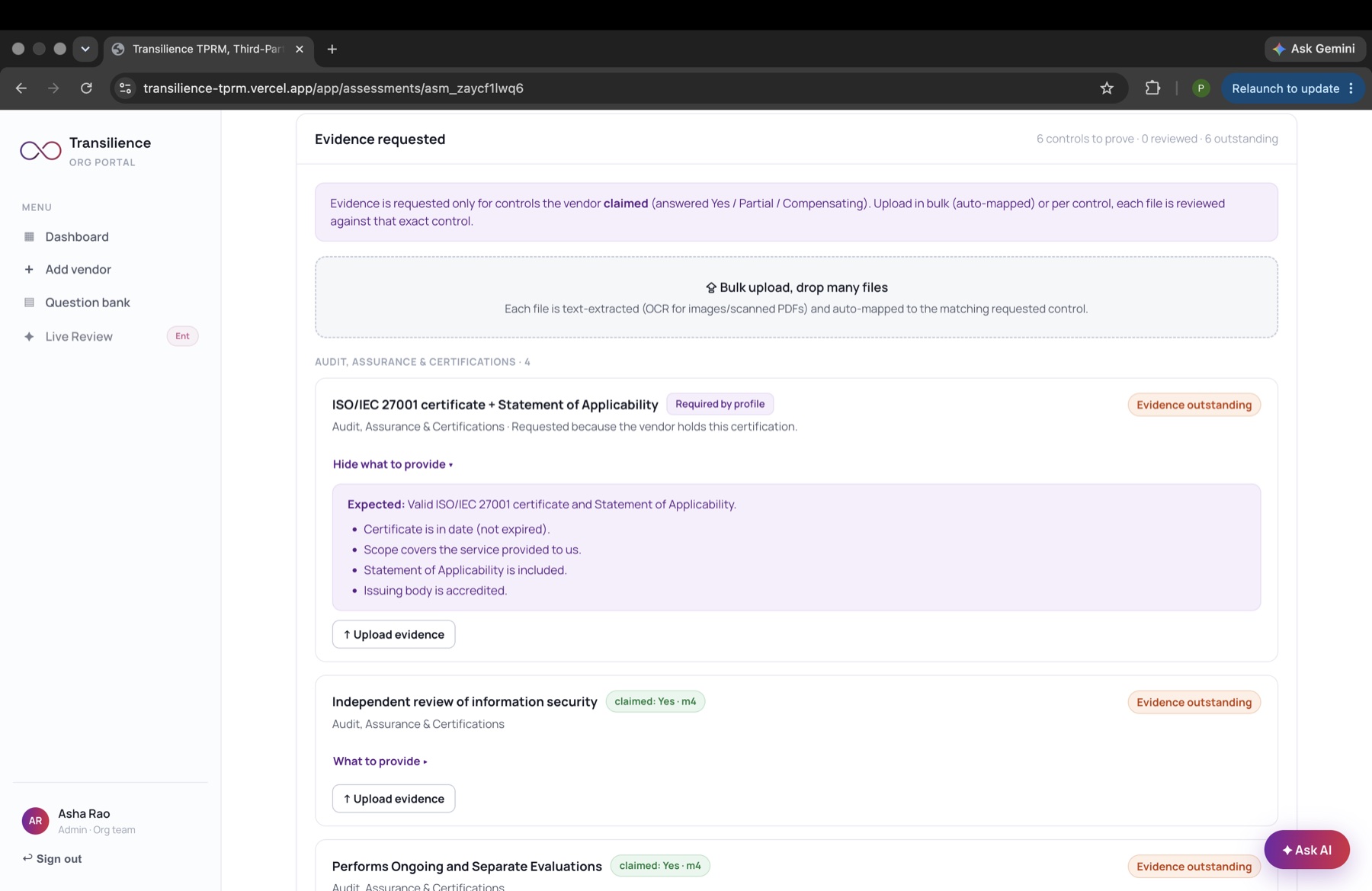
Vendors already have SOC 2 reports, pentest results, and policy documents sitting in a folder somewhere. Document auto-fill lets a vendor upload that PDF, and the platform’s AI maps the evidence directly to open questionnaire items, citing the specific passage and a confidence level for each match, instead of a person cross-referencing a 40-page report against a 60-question form by hand.
A copilot that actually does the task, not just answers questions about it
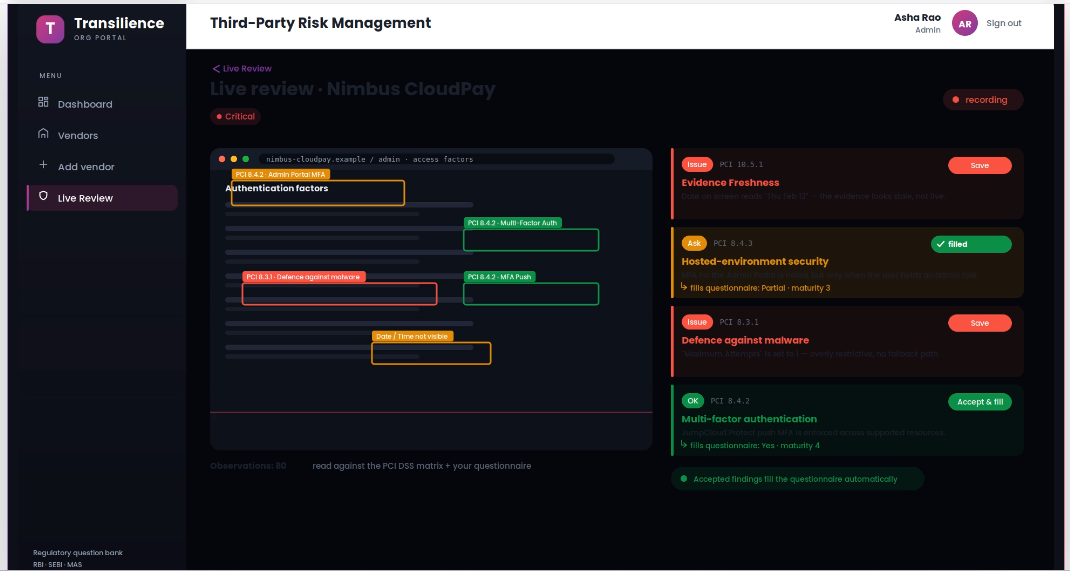
The platform includes an action-taking copilot, reachable by voice or chat, that can create a vendor record, tailor and send a questionnaire, or pre-fill answers directly, scoped to what that specific user is authorized to do. It’s built to execute the task, not just describe how to do it.
Built for regulation, not retrofitted to it
Global TPRM platforms are often built around a generic Western framework and then patched to accommodate local regulators after the fact. This platform’s questionnaire content is built directly from RBI, SEBI, MAS, and DPDP requirements alongside global frameworks like SOC 2 and ISO 27001, so a regulated financial institution isn’t mapping its regulator’s requirements onto someone else’s template; the questionnaire bank already reflects what the regulator asks for.
Who this is for
- Risk and compliance teams buried in vendor questionnaire back-and-forth who need cycle time down without cutting corners on evidence.
- Regulated financial institutions in India, Singapore, and similar markets that need RBI, SEBI, MAS, or DPDP-aligned assessments without building that mapping themselves.
- Vendors and suppliers who are tired of answering the same 300 questions differently for every customer, and would rather submit certifications once and let the platform apply the credit.
- CISOs who need a residual risk number they can actually defend in a board meeting, not one that was calculated once and never touched again.
Want to see your next vendor assessment tailored and sent in minutes? Book a walkthrough.